

Key Takeaways
- ✓Vagus nerve plays a key role in activating the “rest and digest” response, helping lower heart rate, ease breathing, and calm other physical stress responses.
- ✓Vagus nerves don’t work in isolation to manage stress response; other body and brain parts also contribute to it.
- ✓The ability of the vagus nerve to manage the stress response effectively is defined as vagus nerve tone.
Stress is a part of life. We all encounter numerous stressful situations most days, nearly every day, such as tense meetings, a near miss in traffic, etc. If you ever find yourself in such a situation, you may notice one thing: during stress, the heart races, breathing becomes faster, muscles tense up, and the brain feels overwhelmed, but afterward, the body feels normal. Why? One of the systems involved in this entire process is the vagus nerve. It is one of the crucial parts of the parasympathetic nervous system, helping calm our body once stress disappears.
The parasympathetic nervous system is the one that Yufang Lin, MD, defines as: if it does not stabilize us, we remain continuously in a state of anxiety and stress.
Today’s guide explains vagus nerve – the 10th cranial nerve (CN X) and its role in helping the body return to a normal state after stress. This guide also highlights practices to stimulate the vagus nerve for better mental health.
What is Vagus Nerve?
The vagus nerve is a pair of nerves: left vagus nerve and right vagus nerve. It is the longest cranial nerve in the human body, originating from the brainstem; it is connected to other necessary body organs, such as heart, lungs, and digestive organs, by passing through the neck and into the chest.
It is one of the essential parts of the parasympathetic nervous system, the system that stabilizes the body from the fight-or-flight response of the sympathetic nervous system during stress or physical danger. The vagus nerve plays a key role in activating the “rest and digest” response, helping lower increased heart rate, rapid breathing, and other physical stress responses.
What Happens in Your Body During Stress?
Our body, when it is in danger, acts like a survivor. When encountering stress or danger, the body part “amygdala” – acts like a detector overactivates. It sends signals to the hypothalamus, activating the sympathetic nervous system. This entire process triggers the fight-or-flight response, preparing the body for action, either to fight or run. The thing is, this human stress response helped our ancestors survive when facing an animal, like a lion.
The problem is that the amygdala can’t recognize physical danger and life stressors. So, it activates the fight-or-flight response during everyday stress and psychological threats, even when there’s no real danger present. In today’s life, stress becomes persistent. When we keep anticipating them, the fight-or-flight response activates repeatedly, resulting in ongoing anxiety, stress and tension. That’s where the vagus nerve plays an important role in helping the body return to a resting state.
“Yufang Lin, MD, states that if the body’s calm system doesn’t act, the stress responses never shut down.” This increases the risk of extreme anxiety and severe panic attacks.
How the Vagus Nerve Supports Stress Recovery?
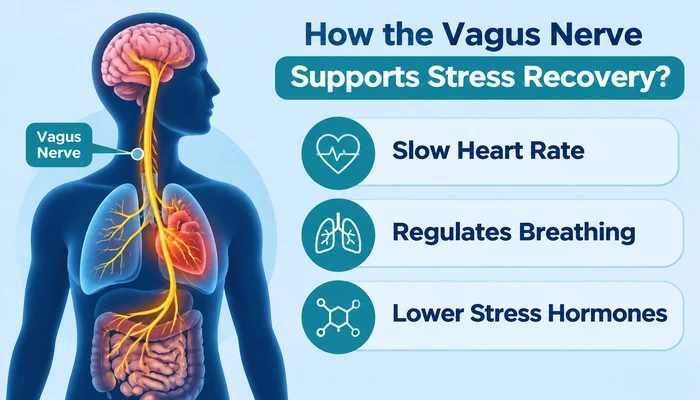
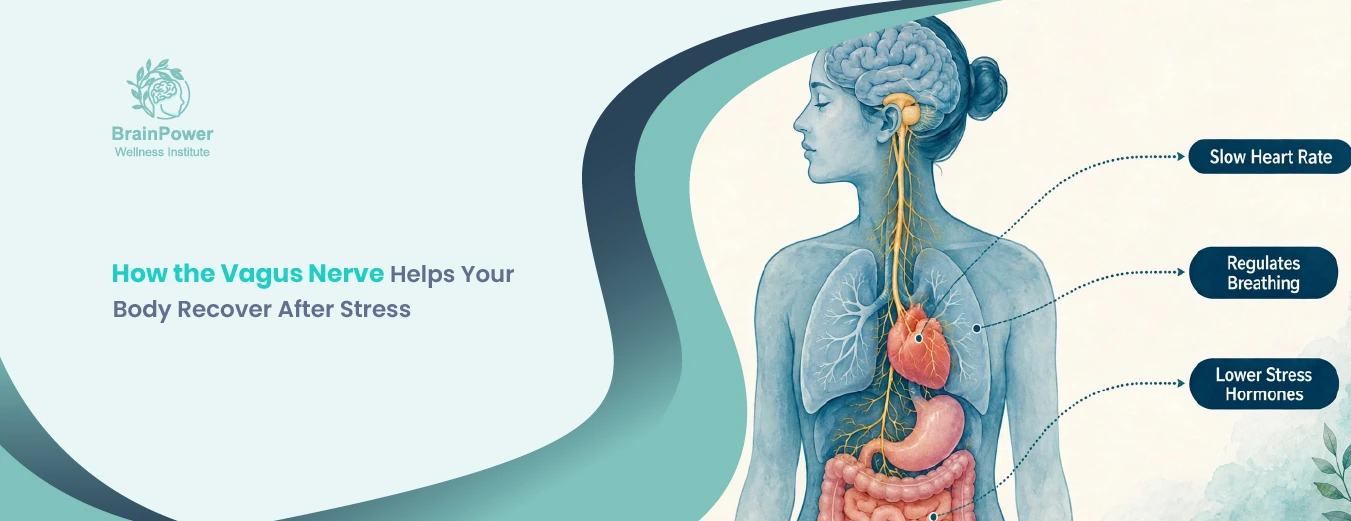
During flight-or-fight response activation due to high stress, several changes occur in our body, mainly a racing heart, muscle tightness, and faster breathing. The vagus nerve is one of the primary pathways of the parasympathetic nervous system, containing most of its nerve fibres. These fibres help communicate between the brain and the body by sending sensory signals from the organs to the brain and instructions from the brain to the organs; that’s why the vagus nerve is a two-way communicator. When the stress passes, this entire process helps ease the body’s stress response.
The vagus nerve doesn’t work in isolation to calm stress response; although it does most of the heavy lifting in this process, other brain and body functions also contribute to it. However, here’s how the tenth cranial nerve helps our body step out of stress mode:
1. Slow Heart Rate
When stress disappears and the observes a safe environment, the vagus nerve signals the heart to calm palpitations and prioritize a steady, healthy rhythm.
2. Regulates Breathing
CN X contributes to easing fast breathing, helping the body return to a state of calmness and relaxation. Balancing panicked breathing helps lower racing heart correspondingly.
3. Lower Stress Hormones
Perceiving threats triggers the hypothalamus to signal the adrenal glands to produce stress hormones to prepare the body to take action. Vagus nerve pathways ensure no excessive production of stress hormones, such as cortisol and adrenaline, when a fearful situation ends.
That’s how the vagus nerve contributes to shift from “fight-or-flight” response to “rest-and-digest”. Despite these factors, the vagus nerve during this process remains continuously connected to other brain and body functions.
Here, it is important to understand that the vagus nerve is an ON/OFF switch. Nor does it require any outside effort to function and bring inner silence; instead, it’s a natural process, and it remains activated all the time.
Can You Support Your Body’s Stress Recovery and Why it Matters?
Yes. You can naturally support your body’s stress recovery, and it is very beneficial too. The more active the vagus nerve is, the easier and faster it is for the parasympathetic nervous system to relax the body and balance stress responses. It is referred to as “vagus tone”.
Vagus tone defines how effective the communication between brain and body is through the vagus nerve. High vagal tone reflects an active tenth cranial nerve with the ability to recover the body’s relaxed state. It processes emotional dysregulation and slows the heart and also adjusts fine-tone rhythm, creating a time variation between one heartbeat and the next, named Heart Rate Variability (HRV).
A Study on “Vagus Nerve Stimulation and the Cardiovascular System” show that active vagus nerve function is highly associated with high HRV, which is often associated with a balanced, fit and resilient body with the ability to manage stress response and heal quickly. Low HRV means the body is more vulnerable to stress, and recovery can take time.
Does Low HRV Cause Anxiety?
There’s no direct link. Low heart rate variability doesn’t cause anxiety. However, 2014 meta-analysis by Chalmers and colleagues highlight the point that people with anxiety disorders have low HRV.
Moreover, a 2026 meta-analysis by Pham and colleagues reports low resting HRV in people with anxiety disorders, mainly with generalized anxiety disorder and panic disorder, with no major association with social anxiety. This means the findings are varied and still limited in examining a cause-and-effect relationship.
So, the point is that you can support the body’s stress management system by keeping the vagus nerve active and optimal. This is important because CN X is one of the major contributors, and better functioning ensures the body remains relaxed and still. Otherwise, it may cause a red alarm.
Vagus nerve dysfunction may contribute to depression and anxiety in patients with chronic obstructive pulmonary disease or congestive heart failure — said Brian J. Kenny and Bruno Bordoni in their StatPearls chapter, “Neuroanatomy, Cranial Nerve 10 (Vagus Nerve).”
Effective Ways to Stimulate the Vagus Nerve
Below are some effective ways professionals often recommend to support vagus nerve tone — the ability of the vagus nerve to manage and respond to stress.
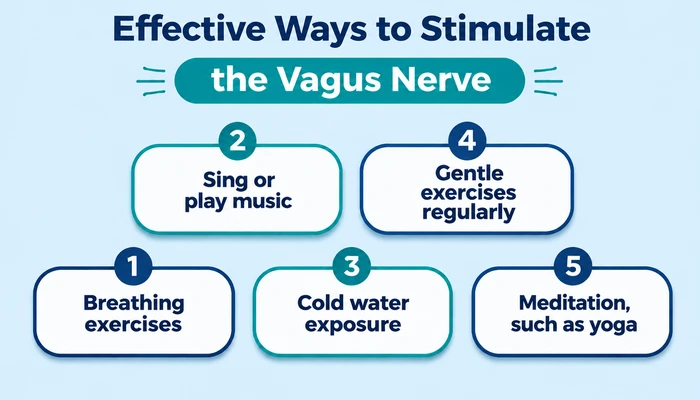
- Breathing exercises (deep belly breathing)
- Sing or play music
- Cold water exposure
- Gentle exercises regularly
- Meditation
Find Compassionate Mental Health Care at BPWIMH!
Vagus nerve plays a crucial role in balancing the body after stress, and practicing exercises is beneficial. However, quality mental health care makes the recovery process faster. Brainpower Wellness Institute provides mental health support to individuals struggling with stress management.
We offer evidence-based treatment, including CBT, DBT, ACT, and more, helping individuals find inner calmness. Whether you are dealing with workplace pressure, relationship conflict or any stressor affecting your mental wellness, we offer specialized counseling services to start perceiving life from a new angle and with hope.
We are accepting new patients with effortless access to a matched psychiatrist within one week.Book your appointment at any of our mental health clinics near you, thanks to our 10 covered locations in California. You can also access care through our telepsychiatry services with insurance coverage on most plans. Make your move today and start responding to life stress in a better, healthier way.