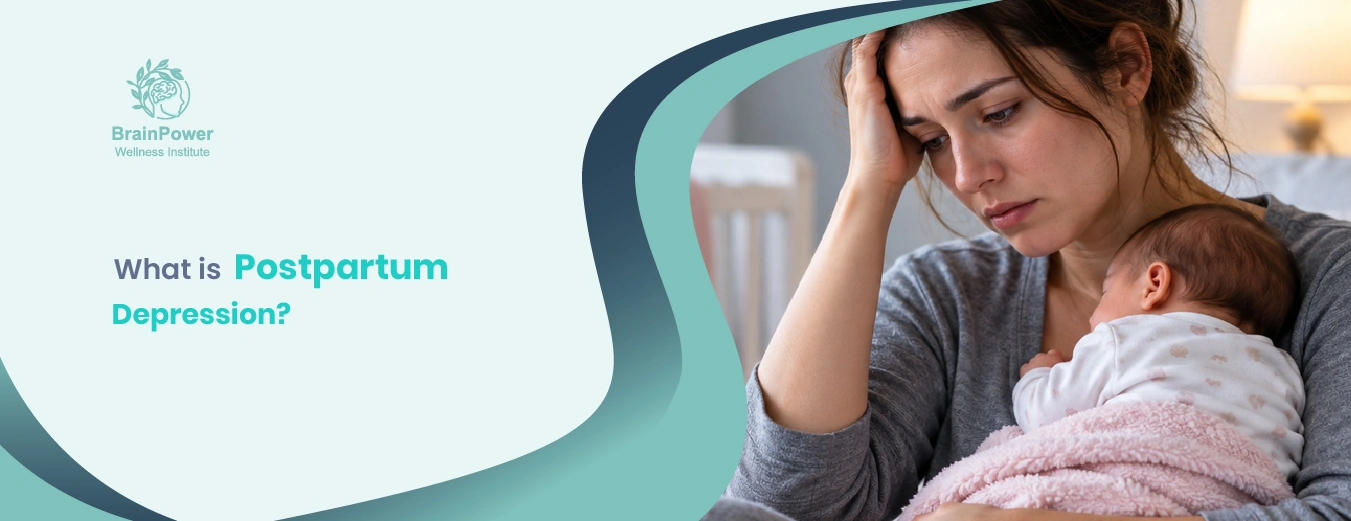



After the baby’s birth, life changes. A new family member brings numerous feelings for the mother, such as excitement, joy, frustration, or a combination of all. Also, after pregnancy, experiencing mood swings and feeling a bit anxious are common feelings for new mothers too, due to hormonal shifts and lifestyle adjustments.
However, these feelings become intense and persistent in some mothers, often expressed as deep sadness, anxiety, frequent crying, feelings of worthlessness, etc. This is not normal, but a mood disorder called postpartum depression.
If you are experiencing mood lows after pregnancy, it’s crucial to read this guide till the end to understand your actual condition, effects, and the importance of getting timely treatment.
Key Takeaways
- ✓Postpartum depression is a form of depression that occurs after childbirth.
- ✓It affects 1 in 7 women globally.
- ✓It includes feelings of extreme sadness, anxiety, loneliness, low energy, irritability, and more.
- ✓Postpartum depression affects the newborn and can also cause trouble with self-care.
- ✓This mood disorder can be managed through therapies, medication, and support.
What is Meant By Postpartum Depression?
Postpartum depression is a depression that is experienced by 1 in 7 women after giving birth. It mainly occurs within 1 to 3 weeks after the baby’s birth and lasts for 3 to 6 months, or even up to 1 year depending on when the symptoms appear and how early care is received.
As it’s a type of depression, it causes severe mood swings and emotional shifts. Women with such a disorder remain sad, anxious, cry frequently, feel hopeless, and in some cases, self-isolate. These symptoms can also be noticed during pregnancy, which is called prenatal depression, and it’s a core indicator of postnatal depression. This not only affects mothers psychologically and physically, but also impacts newborns’ emotional and physical development.
Is Postpartum Depressive Disorder the Same As Baby Blues?
No. Postpartum baby blues are different. Although baby blues involve the same symptoms, such as mood swings, worry, and irritability, and affect 3 in 4 individuals, they are not chronic. Also, these mood changes are short-term and fade away on their own, lasting for 2 weeks or less.
Does PPD Go Away On Its Own?
No. Unlike baby blues, postpartum depression (PPD) doesn’t go away on its own; it requires specialized treatment and personalized care. In fact, delaying treatment lets conditions worsen.
What are the Symptoms of Postpartum Depression?
To get out of maternal depression, the first step is understanding the symptoms. Knowing the signs helps you identify your condition and prioritize necessary actions. Below are some of the signs discussed that indicate postpartum depression.
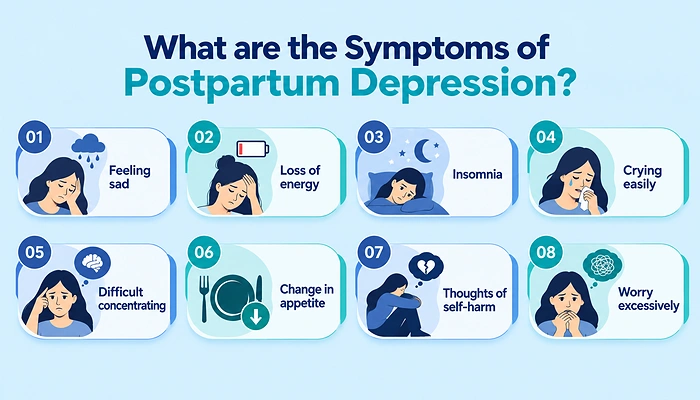
However, the postpartum depression symptoms may vary from person to person. Not every woman with this condition experiences the same signs; nor do they need to experience all or any specific symptoms to be diagnosed with it. Instead, it depends on the severity type and timeline of onset.
The following sign strongly indicates having depression after childbirth:
- Feeling sad or low mood
- Low self-esteem or worthlessness
- Worry excessively
- Loss of interest in baby care
- Hopelessness or low motivation
- Loss of energy
- Insomnia or hypersomnia
- Change in appetite
- Crying easily
- Difficult concentrating
- Thoughts of self-harm or hurting the child
Noticing these signs indicates that you may have postpartum depression. During this condition, anxiety symptoms such as a racing heart, shortness of breath, and sudden panic attacks might also be noticed. Uncontrollable thoughts about not being a good mother, which foster false beliefs and negative doubts, become repetitive for some individuals.
Despite everything, poor child bonding or lack of mother-child connection is not your fault; what really matters is making improvements, not all at once, little by little.
Moreover, in some women, symptoms such as hallucinations and delusions might be noticed. It is a rare scenario that impacts 1 in 1000 women. This term is known as postpartum psychosis and is severe, requiring immediate mental health services or support.
What are the Causes of Postnatal Depression?
If you are doubting yourself or questioning your ability to be a parent or have feelings of inadequacy, it might calm your intrusive thoughts that the cause of depression after delivery is unknown. This means being stuck in such distressing feelings; it’s not your fault.
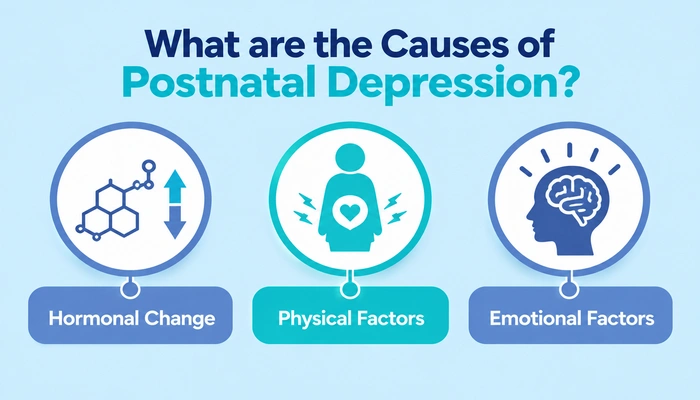
Instead, researchers believe the cause of maternal depression is a combination of physical, emotional, genetic, and social factors. So, it’s clear that there’s no standalone cause, but numerous factors, such as a sudden hormonal drop, stress from life adjustments, sleep challenges, etc, contribute to it.
Here is the breakdown of every factor that increases the risk:
Hormonal Change
- Hormone Drop: After delivery, hormone levels, such as estrogen and progesterone, decrease significantly, making it one of the major causes.
- Brain Chemicals: Hormones like estrogen fuel feel-good hormones, such as serotonin and dopamine. A sudden drop affects overall brain chemistry, including these essential neurotransmitters too, which are responsible for mood regulation. This results in mood swings, mainly sadness.
Physical Factors
- Sleep Deprivation: Pregnancy often causes insomnia, and also childcare often involves sleepless nights, which can increase the risk of depression after pregnancy.
- Exhaustion: The period after delivery is a phase of the body’s physical recovery. High childcare demands during that time can affect mood.
Emotional Factors
- Lack of Support: Emotional support from a partner and other family members during and after pregnancy matters. However, lack of support often results in loneliness and isolation.
Learn how to support someone during postpartum depression in our detailed guide.
- Life Stress: Passing through major life stressors and challenges such as relationship loss and financial anxieties is another major cause of depressed mood.
These are some of the factors that new mother depression could be a response to. Despite that, there are some risk factors too that increase your chances of experiencing depression after delivery. These include:
- Having a history of depression
- Single parent
- Marital conflicts
- Young-age pregnancy
- Having a baby with special needs
Moreover, if you are a mother of a preterm infant or experience a miscarriage, these can also be risk factors for postpartum mood disturbance.
What are the Consequences of Untreated Depression After Delivery?
Depression after childbirth requires mental support. But due to overlapping symptoms and misunderstanding them as baby blues, they are often ignored. Over time, it intensifies, resulting in severe consequences, including difficulties with feeding, bonding, and sleeping. Here’s how untreated postpartum depression impacts:
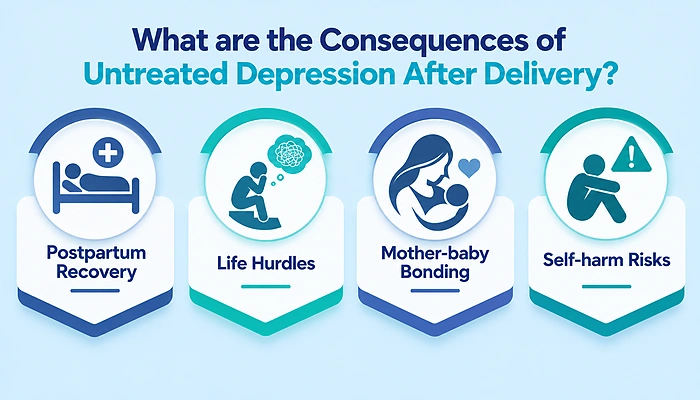
Postpartum Recovery
After childbirth, the physical and emotional recovery phase starts. With long-term depression, the body’s natural recovery process starts delayed or slows down, making recovery challenging. Also, sleep issues and lack of self-care, which are common in postpartum mood disorder, disconnect women from prioritizing themselves and often cause missed follow-up appointments.
Life Hurdles
Life after having a baby has a lot of expectations and joy, but chronic depression raises several complications. It makes life too challenging for a woman. It impacts their parenting abilities and, due to mental exhaustion and physical tiredness, it also affects their ability to manage responsibilities. This is the main reason most women after delivery face communication challenges and conflicts with their partners.
Mother-baby Bonding
Parenting plays an important role in baby mental and behavioral development. The connection between parents and their infants is necessary for emotional connection. Babies learn from their parents and the surrounding environment, as well as from how parents respond to their physical and emotional cues; responding warmly, promptly, or quickly gives them a sensation of care and safety. However, postpartum depression affects that bonding. It makes women unable to offer the required care to their babies, and it is also difficult to adapt child-rearing strategies, resulting in a major mismatch between parenting and the child’s built-in personality. This affects the baby, often causing developmental delays.
Self-harm Risks
Untreated postnatal depressive disorder increases the risk of harm to oneself and may also lead to risky actions towards babies. Due to repetitive, distressing thoughts and beliefs, the ideation of suicide or other risky behaviors frequently comes to mind. So, if you have such thoughts, call 988.
Is It Possible to Avoid Post-baby Depression?
With such severe consequences, the question often comes up: how to avoid or prevent it? Well, there’s no way to avoid its development during pregnancy. As we discussed earlier, the exact cause is unclear, so you can’t take necessary action against it to avoid getting postpartum depression. But with the symptoms discussed earlier, you can spot it early and take action to prevent the risk from becoming unmanageable. Also, this mental health condition is highly treatable, which means there are a lot of treatment options available.
However, selecting the right treatment is non-negotiable. Most women worry about finding a specific treatment that is safe during the postpartum period, which is a real concern. Here, it is important to understand that treatment depends on the condition, the actual state, and the intensity of symptoms, which the diagnosis helps identify.
How is Postpartum Depression Diagnosed?
Diagnosis is a complex process and must be performed by a certified psychiatrist. It is not a one-step process. Instead, diagnosis is a comprehensive evaluation of the condition, which involves multiple stages, tools, and techniques.
To diagnose postpartum depression, psychiatrists use various evaluation techniques, such as screening questionnaires, reviewing medical records, and physical assessment, to evaluate an individual. This meticulous process helps mental healthcare providers determine whether the current condition meets the diagnostic criteria.
During diagnosis, the professional may ask a couple of questions regarding feelings and pregnancy, such as how long after pregnancy the symptoms started, or were noticed during pregnancy. Here, one thing worth understanding is to be honest and clear while describing your mental and emotional state. Don’t feel hesitant or stigmatized; giving a clear picture of your inner self helps the psychiatrists prepare a personalized, holistic treatment plan.
Is There Any Test Required for Postpartum Depression Diagnosis?
No. There’s no specific test that helps diagnose depression after pregnancy. The condition is diagnosed at a specialized mental healthcare facility by a licensed psychiatrist.

Book an Appointment Today
If you want a comprehensive evaluation of your condition in a confidential clinical environment, choose Brainpower Wellness Institute. Our certified mental healthcare doctors diagnose your condition comprehensively and help you with the appropriate treatment.
How is Postpartum Depression Treated?
There are a variety of treatment options available. You undergo the one that matches your condition, either individually or as a combination of two or more approaches. For depression in new mothers, psychiatrists prioritize a combined method, which includes psychotherapy and medication. It doesn’t mean that what works for everyone will ensure the same level of effectiveness for you. It depends on your mental stage and the data gathered through screening or clinical assessment.
The widely followed and clinically proven treatment for postpartum depression includes the following:
Psychotherapy
Psychotherapy, also known as talk therapy, is a highly effective, collaborative treatment approach. It involves several evidence-based, scientifically proven treatment approaches that help individuals dealing with mental and behavioral challenges get quality treatment and improve their overall wellness. Psychotherapy helps patients learn coping skills to build resilience and help control behaviors, while emotional support helps neutralize emotions.
As a collection of various psychological techniques and methods, there are a few psychotherapy types that work well for depression following childbirth. These include:
Cognitive Behavioral Therapy (CBT)
A highly researched and widely practiced form of psychotherapy, CBT is a first-line treatment in the world of psychotherapy for a variety of mental health illnesses. It helps individuals improve their mental and behavioral health by identifying and replacing negative thoughts that trigger distress and painful emotions.
CBT involves sessions with a licensed psychiatrist, where individuals find support. Therapists help patients identify that their thoughts are just imaginations, not facts, and teach coping skills. These sessions also focus on learning or practicing mindfulness-based activities, known as Mindfulness-Based Cognitive Therapy (MBCT), to prevent relapse.
Interpersonal Therapy (IPT)
In most women, the cause of depression is worry or anxiety, and loss of relationships, death of a loved one, and job loss can potentially drive it. Interpersonal therapy is one of the effective options for those individuals, as IPT helps resolve current interpersonal problems associated with grief, role disputes, role transitions, and interpersonal deficits. Through interpersonal psychotherapy, the therapist focuses on one or more areas, depending on the individual’s personal life.
The primary purpose of this therapy is to resolve conflicts and provide relief from major life disruptions by building communication skills and focusing on the present. This helps them improve communication, while the practical skills development ensures they move forward with a new chapter of life after a big change, for instance, coping better with anxiety after divorce during postpartum.
These are two highly efficacious treatment approaches to postpartum anxiety and depression, but the options don’t end here. Assessing your condition, the psychiatrist may suggest you undergo a different therapy. But whichever psychotherapy technique is suggested to treat PPD, the main benefit is that they are completely safe during breastfeeding and have no side effects.
Medication Management
It is also an effective way for breastfeeding mothers to treat depression. Psychiatric medication management works well alongside therapy and also has a strong safety record when instructions from a licensed mental health doctor are carefully followed. Psychiatrists often prescribe antidepressants to some women to help reduce depression and anxiety symptoms. Also, they help improve sleep and eating habits.
Antidepressants work by balancing hormone levels and can take 2 to 4 weeks to show improvement in mood and emotion.
Medication can cause side effects too when taken excessively or when a healthy schedule is not maintained. So, it is highly important to consult with a psychiatrist for valuable guidance.
Alongside treatment, the following are some of the habits you can adopt that help you cope with depression after childbirth.
- Prioritize self-care
- Get fresh air
- Eat nourishing foods
- Short walk daily
- Talk or openly share feelings
- Get counseling or join group sessions about parenting
How Long Does Postpartum Depression Last?
Postpartum depression can last for up to 1 year after childbirth. But it doesn’t mean you will recover within 12 months or that symptoms will disappear on their own after that duration, with or without care. Instead, it is a timeline indicating that most women start feeling better within this time frame, while some feel relief within 3 to 6 months; and in some cases, symptoms last for up to 3 years when conditions remain untreated.
So, how long symptoms last varies, with condition severity and the timing of care delivery as the most contributing factors. Don’t delay asking for help when you notice symptoms; consult with a mental health doctor, share your condition, and receive care.
Find Personalized Care At BPWIMH!
Care must be delivered on time, but it matters when it meets your needs and goals. We at Brainpower Wellness Institute help individuals get personalized care from certified psychiatrists. We treat patients using several outcome-driven treatment approaches, selected based on their conditions assessed through a meticulous diagnostic process.
Our licensed mental healthcare providers offer whole-person care to individuals, rather than focusing on a symptom, ensuring holistic recovery. We help patients get relief from extreme sadness and fatigue and ensure they start living happily with a new family member.
So, if you are looking for a certified therapist for postpartum depression near you in California, choose BPWIMH and get treatment at an affordable cost by taking advantage of our in-network insurance coverage. Call (714) 712-0711 for more info!